Case Study
A Designer's Verdict
As Lead UI/UX Designer at Forensic Analytics I’m always keen for exposure to how products, like CSAS, are used in the wild. So, it was with pleasure that I took the opportunity to attend Crown Court and see one of our 3 founders, Martin Griffiths, testify in his capacity as an Expert Witness.
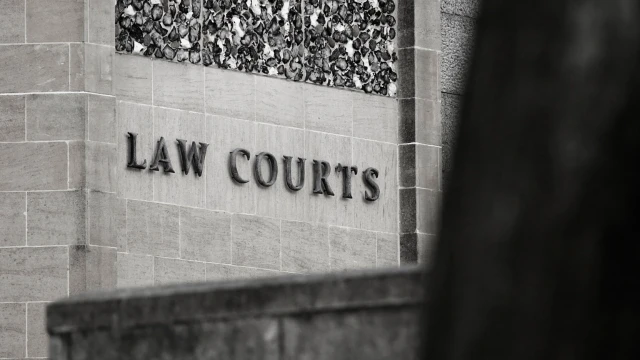

Blissfully naïve to the workings of a court, I was in for a day of learning.
On arrival, all visitors must pass strict airport-style security. The court room is upstairs, and the prosecution team occupy a couple of nearby offices. That's where I meet Martin and the team, preparing and checking over every detail of the testimony. The mood is upbeat but serious. The charge is conspiracy to murder, which often results in sentences of 20-30+ years in prison.
The case is complex, and the prosecution relies on a series of assertions that certain people were in certain places at certain times. Each assertion is supported by a chapter in the thick, printed A3 document detailing CDRs, ANPR hits, RF survey results and more.
Serious work has gone into making these docs presentable. Aside from the monumental data analysis, effort has clearly gone into label placement, succinct display of call data, and getting the right level of detail on the map. The end product is concise and consumable.
An announcement over the PA informs us it’s time to enter the court room.
Court 12 is familiar to anyone who's seen a courtroom drama. The High Court judge sits in an elevated position, facing 2 blocks of desk aisles; 1 side for the defence; the other for the prosecution. To the judge's left is the witness box, beyond which sits the jury.
The defendants sit in a separate room and observe through a window.
There are monitors all around the room, and an officer controls the visual display. The barrister works with a paper version, and each member of the jury has a copy.
We are called to rise, and the judge enters.
The barristers, in wigs and gowns, are clearly very focused on the proceedings, conferring and taking notes throughout.
The jury, who have already served for a couple of weeks, look like normal people. They're not obliged to dress up, or to be excited to be there. They have incredible responsibility, but they're not experts, their service is unpaid, and they’d probably prefer to be elsewhere. The only training they get is a crash course in cell site analysis from Martin so that they can follow the illustrations.
Each of the three defendants has a team of two barristers so, counting the number of bodies in the room, the daily operating cost of a court room must be enormous, and this is a long trial. It's in most people's interest to run things efficiently. All except perhaps the three attendees who might prefer the whole process to collapse.
The gravity of the crime feeds into the atmosphere. This is a level up from any corporate presentation. Taking the stand, Martin is prompted by the barrister and begins the testimony, tending to address the jury directly. However, the interjections from the barrister and the judge mean that he must also be ready to adapt.
The testimony is a painstaking presentation of the printed material, ensuring everything is clear and suitable for the non-expert audience. It’s heavy going, but the illustrations shine and support the fluent delivery of the products of cell site analysis to each member of the jury.
Jury duty looks hard. Jurors must focus for long sessions. Some material is easy to understand; the long drives along motorways leave a neat trail of datapoints. Other trips, such as inner-city travel, present greater challenges. As a designer, I can’t help ideating around how the chronology of events could be better visualised both as an interactive exhibit and a static image.
The testimony is compelling and, suspending judgement, it’s hard not to feel sorry for the defendants, who can only watch on as the data attributed to them feeds an outcome which serves the Criminal Justice System. CSAS, balanced with the expertise of a prosecution team, is a powerful combination.